
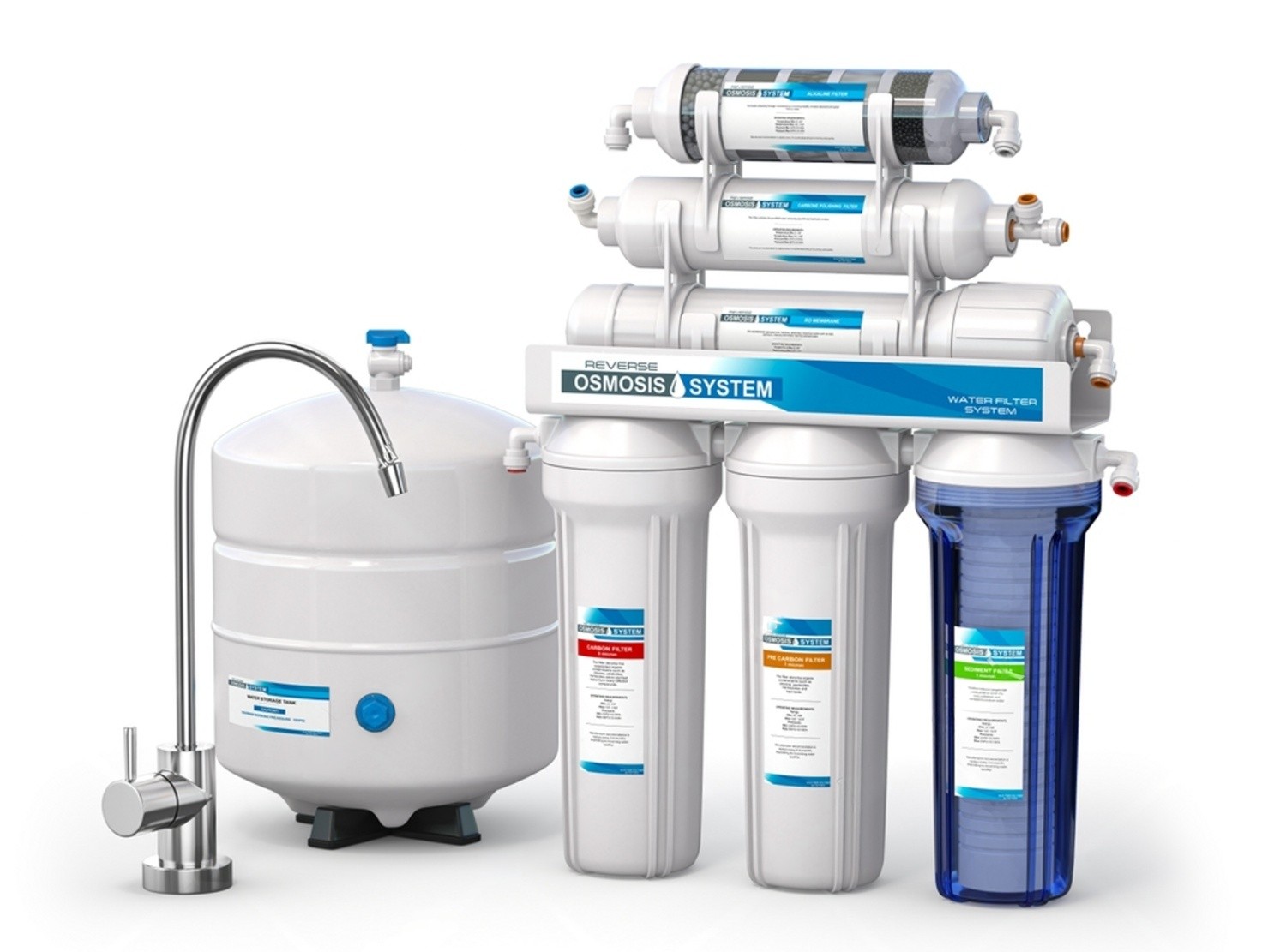
Choosing a water purifier can feel surprisingly complicated -RO, UV, UF, TDS, alkaline, multi-stage purification. There are plenty of terms, but which one actually matters for your home?
No single purifier is perfect for every home. The right choice depends largely on the quality and source of your water.
If your home receives municipal water, your requirements can be very different from someone using borewell or tanker water. So, before choosing a purifier based only on its brand, price, or number of purification stages, it helps to understand what RO, UV, and UF actually do.
At Lotus Electronics, we break it down for you.
RO, UV and UF: What do they actually mean?
Think of these three technologies as different specialists working on different kinds of water problems.
1. RO - The Heavy Lifter
RO stands for Reverse Osmosis.
RO uses a semi-permeable membrane to filter water under pressure. One of its biggest advantages is that it can reduce dissolved salts and other dissolved impurities, making it particularly useful when the incoming water has high TDS (Total Dissolved Solids).
This is why RO purifiers are often preferred for borewell, tanker, or other high-TDS water sources.
However, RO purification also means that some naturally occurring minerals are reduced along with unwanted dissolved substances. Many modern RO purifiers include features such as TDS control or mineral/alkaline cartridges.
Best suited for: High-TDS water, borewell water, and tanker water.
2. UV - The Germ Fighter
UV stands for Ultraviolet purification.
Unlike RO, UV does not primarily work by removing dissolved salts. Instead, UV light is used to inactivate microorganisms such as bacteria and viruses.
That makes UV particularly useful when the main concern is microbial contamination in relatively low-TDS water.
UV purifiers generally work best when the incoming water is already reasonably clear because suspended particles can interfere with the effectiveness of UV treatment.
Best suited for: Municipal or low-TDS water where microbial safety is the primary concern.
3. UF - The Fine Filter
UF stands for Ultrafiltration.
UF uses a very fine membrane to physically filter out suspended particles and certain microorganisms. Unlike RO, it does not significantly reduce dissolved salts or TDS.
UF also does not require the same kind of high-pressure process as RO.
That makes UF useful as part of a purification system, particularly where the water doesn't have high dissolved solids.
Best suited for: Low-TDS water where filtration of suspended impurities and microorganisms is important.
RO vs UV vs UF: Which one should you choose?
Before buying a purifier, ask yourself one simple question:
“Where does my home's water come from?”
That answer can narrow down your choices considerably.
|
Technology |
What it mainly does |
Ideal for |
|
RO |
Reduces dissolved salts/TDS and many dissolved contaminants |
Borewell, tanker & high-TDS water |
|
UV |
Inactivates microorganisms |
Municipal & low-TDS water |
|
UF |
Filters fine suspended impurities |
Low-TDS water |
|
RO + UV + UF |
Combines multiple purification methods |
Homes that want broader purification
|
5 Water Purifiers to consider from Lotus Electronics
If you're looking to compare options, Lotus Electronics lists a wide range of RO, UV, and multi-stage water purifiers. Here are five interesting models from its range.
1. ATOMBERG Intellon Adaptive RO Water Purifier
For people who want a modern purifier that doesn't simply run RO all the time, the ATOMBERG Intellon is an interesting option.
It features RO + UF + UV, along with an alkaliser and taste enhancer. What makes it particularly interesting is its adaptive purification approach. It can use UF + UV when the TDS is below 300 and RO when required.
It also comes with an 8-litre storage capacity and smart/IoT functionality.
Why consider it?
If you want multiple purification technologies along with a smarter approach to when RO is used, this is worth considering.
Market Price: Rs. 25,999
Lotus Price: Rs. 17,799
2. Eureka Forbes Aquaguard RO + UV + CU Alkaline
The Eureka Forbes Aquaguard is designed for buyers looking for a comprehensive multi-stage purification system.
The model listed by Lotus Electronics features RO + UV + CU Alkaline and a 5.0 litre capacity. It also has features such as auto-flushing and cartridge-life indicators.
The combination of RO, UV, and CU makes it suitable for households looking for multiple layers of purification, particularly where water quality can vary.
Why consider it?
A strong choice if you want an all-rounder with RO, UV, and CU Alkaline in one system.
Market Price: Rs. 31,000
Lotus Price: Rs. 23,199
3. KENT Grand Plus RO + UV + UF + TDS
If you are looking for a purifier with a larger storage capacity, the KENT Grand Plus is another option available through Lotus Electronics.
It offers RO + UV + UF + TDS control and comes with a 9-litre storage tank. It also has an RO membrane capacity of 100 litres per day and an auto-flushing system.
One useful feature is its TDS control, which allows users to adjust the level of TDS in the purified water.
Why consider it?
A practical option for families looking for a larger-capacity RO purifier with multiple purification technologies.
Market Price: Rs. 25,500
Lotus Price: Rs. 18,499
4. Havells UV Plus 7-Litre UV + UF Water Purifier
Not every home needs RO.
If your home primarily receives municipal water with relatively low TDS, a UV + UF purifier can be a more appropriate choice.
The Havells UV Plus comes with UV + UF technology, a 7-litre storage tank, and a 5-stage purification system.
Because it does not use RO, it is designed around UV and UF purification rather than reducing dissolved salts through reverse osmosis.
Why consider it?
A good option to explore if your water source is municipal and high TDS isn't your primary concern.
Market Price: Rs. 15,790
Lotus Price: Rs. 9,899
5. Eureka Forbes Aquaguard Premier UV + UF
Another option for low-TDS or municipal water is the Eureka Forbes Aquaguard Premier UV + UF.
It is a UV + UF purifier with a 6-litre storage tank, 5 purification stages, and a specified TDS range of 1-200 mg/litre. It also includes copper and zinc infusion and a booster pump.
The product is specifically positioned for municipal water and is not intended for borewell or tanker water.
Why consider it?
If your home gets municipal water and you want UV + UF purification without going for an RO system, this model is worth a look.
Market Price: Rs. 18,500
Lotus Price: Rs. 10,099
So, which water purifier is right for you?
Here's a simple cheat sheet:
Borewell water?
Look towards RO or RO-based multi-stage purifiers.
Tanker water?
An RO purifier is generally worth considering, especially if the water has high TDS.
Municipal water with low TDS?
You may not need RO. UV + UF can be a more suitable combination.
Don't buy a purifier just because it has more stages
A purifier with 10 stages isn't automatically better than one with 5 stages.
What matters is whether those stages address the actual problems in your water.
Start by understanding your water source and, ideally, check its TDS and overall quality. Then look at the purification technology, storage capacity, filter replacement requirements, installation, and after-sales service.
And remember: RO, UV, and UF aren't competitors. They solve different problems.
RO tackles dissolved impurities and high TDS. UV focuses on microorganisms. UF provides fine physical filtration without significantly reducing dissolved salts.
For more options, you can explore the Water Purifiers & Dispensers section on Lotus Electronics, which includes RO, UV, and other purifier options from brands such as KENT, Eureka Forbes, Havells, and ATOMBERG.

